Saturday, October 15, 2011

Making the First Move

I was teaching a review session for my chemistry students the other day when one of my students (a post-bacc in her late 30’s) approached me.

“Lisa, I don’t mean this to be offensive so please don’t take it as such. But I really wish there were more Muslims that do what you do.”

With a half-smile and some confusion, I replied, “What do you mean?”

“It’s just refreshing to see a Muslim going out of her way for me.”

She proceeded to tell me the story of how her brother was a victim of the 9/11 attacks. I cannot even begin to attempt to paraphrase the complexity and emotion of her words so I won’t.

At this point, she was almost in tears, and said

“I mean, I see a lot of Muslims every day who aren’t terrorists, but I don’t see them as anything else. It’s just nice to finally have a relationship with a Muslim.”

She then apologized for ranting, changed the subject, and proceeded to ask about the titration question we had just gone over. But I couldn’t seem to focus on that.

As a convert, I often wonder if I am, in fact, being a “good Muslim.” For so long, I took that to mean praying five times a day and fasting during Ramadan, but it has grown to mean so much more. Having left the comforts of MSA-life behind, I now often find myself as the only Muslim in the room. Whether I’m doing experiments in the lab or teaching a group of first-year chemistry students, my responsibility to be an example on behalf of all Muslims has recently become more evident. I mean, it would certainly be easier if people did not directly associate my actions with my Islam, but I am well aware that this isn’t the case.

Is it fair? No. Is it reality? Yes.

The Muslim community needs to step up its game. We want people to stop having issues with us, but we don’t want to do anything to engage them. (And no. Shoving dawah pamphlets in people’s faces does not qualify as community engagement.) We are such multi-faceted people with unique talents and skills that, theoretically, we should be able to connect with a large, diverse population of people. But instead of making the first move, we sit and wait for “the other” to come to us. And when they don’t, we hide behind this fact and blame them for their lack of willingness to learn about our religion.

As part of our respective communities, we need to do things to connect with all people, Muslims and non-Muslims. And this doesn’t even need to be done on a grand level- some of the simplest things we do can facilitate the beginning of conversations that really need to take place if we ever want to be understood. Community service and random acts of kindness are a great place to start. People notice when you do something for them because, regardless of how big or small you may think your actions are, you put their needs ahead of your own. Actions like these speak much louder than any pamphlet ever could.

We shouldn’t be content with simply being recognized for not doing something bad. We should strive to be known for the good things that we do for the benefit of others. May Allah give us all the courage to make the first moves in reaching out to those with whom we come in contact and may He allow for us to foster a sense of understanding and acceptance of all people in our respective communities. Ameen.

Saturday, July 16, 2011

Sweet Charity


The Islamic month of Ramadan will [insha’Allah] be back again in just a few weeks. While most people understand the blessed month to be a time during which Muslims abstain from food, drink, and sexual intercourse for the period of the daylight hours, Ramadan holds a much greater meaning.

This 30-day abstention from food and drink gives us an infinitesimal glimpse at the daily lives of the poor while allowing us to refocus our time and energy on other, more spiritual things, the goal being that we will maintain that focus outside of Ramadan.


One of the 5 Pillars of Islam mandates that those whose wealth amounts to more than a specified minimum must give a small percentage of this wealth to those in need [zakat]. Additionally, voluntary donations [sadaqah] are highly encouraged in Islam and are considered to be a proof of one’s faith. While charity in all forms is encouraged year-round, it is especially significant in the month of Ramadan.

Ibn Abbaas reported that the Prophet Muhammad (saws) had been more munificent than the falling rain. He was said to have been even more so in the month of Ramadan, such that his generosity in the previous 11 months would not compare to his giving in that month alone.


But a lot of us hold our money with a clenched fist when it comes to giving it to others. Many give only the required zakat each year and some of us can’t even bring ourselves to do that, let alone give voluntary donations. Recent psychological studies [published in the March 21 issue of Science in 2008] have concluded that people who spend money on others (be it gifts, donations, etc.) reported significant boosts in happiness than those who use their money solely for personal spending. The long-term, compounding effects of charitable spending far outlasted the fleeting pleasure people felt from personal consumption. So if you’re finding that you’ve become less happy or more irritable than you once were, think about how you’ve been using your money- that might just be the cause.


If you can remember all of the times you’ve donated money, you’re probably not giving often enough.

Don’t wait until the last week of Ramadan to start thinking about giving to others. Better yet, don’t even wait until Ramadan- do it now! And don’t let Ramadan be the only time you donate. Give consistently all throughout the year, even if you can only spare a few dollars every week. If your intention is pure, insha'Allah you will be rewarded each time.


You don’t need to be Muslim to give to those in need. And those to whom you give most certainly needn’t be Muslim.


May Allah allow all of us to reach and experience the blessings of this upcoming Ramadan and may He soften our hearts to those in need, allowing us to give freely from what He has so graciously given to us. Ameen.

Thursday, June 16, 2011

Asking the Muslims to Ask Allah

I tried really hard not to write anything regarding the Anthony Weiner nonsense (specifically with regards to his Muslim wife, Huma Abedin). I really did. But recent conversation and media have warranted a Muslim sister’s perspective on the issue and I decided to step up to the plate even though I might strike out.

So as far as I can tell, there are two general opinions that Muslims seem to be taking:

1) that Huma should work things out with Weiner
2) that Huma should leave him because she shouldn’t have married a non-Muslim in the first place or because she deserves someone better

First of all, let’s just stop.

Does what we say she should do really matter to Huma Abedin? No. She’s going to do what she wants to, regardless of what we think she should do.

Do we really think that we’re helping in some way by announcing to all our friends and co-workers that “she must stick by her man no matter what” or that “this happened to her as a punishment for marrying a non-Muslim man”? Because it’s not. [Why aren't we more concerned with prepping for Ramadan? It's only weeks away!]

If we actually want to help Huma, let’s just pray for her. Make dua that our sister finds comfort and ease again. Make dua that Allah will keep her [as well as the rest of us] on the path of Islam and that He allows her to find happiness. And may He allows us all to be as merciful towards one another as He is to us.

Ameen.


The Prophet (saws) was reported to have said, "Whenever you make a supplication for another believer and he is not present, an angel will say ‘and same to you.'"

"The supplication that gets the quickest answer is the one made by one Muslim for another is his absence." [Tirmidhi]

Sunday, March 13, 2011

Let's Talk About Hijab


When we hear the word hijab, or (head) cover, we immediately picture a Muslim woman wearing a scarf and perhaps a long, loose-fitting dress. We might even picture specific women in our community who fit the bill. But this word very rarely (if at all) makes us picture a man.

The men of the Muslim community are especially good at spotting hijabi women (those who choose to wear the scarf) who are not properly covered (according to the standards set by their mental picture of a hijabi woman). This superhero-like ability allows for them to rush over and" kindly" let us know that we have a hair out of place or that our ankles are visible.

"Astugfirullah! All your hair is showing!"
"Those pants are way too tight!"
"This is not the appropriate dress of a modest Muslim woman!"

Ok. So perhaps men need to be a bit more considerate in their approach.

But as nice as it is to know that Muslim men are so concerned with the hijab of Muslim women, it would be nicer to know that men were just as concerned with their own hijab. (What?! Hijab for men?!) Yes. Men have to wear hijab too.

Allah says in the Qur'an, "Say to the believing men that they should lower their gaze and guard their modesty: that will make for greater purity for them: And Allah is well acquainted with all that they do." [24:30]

For men, the hijab entails covering everything from the navel to below the knees. From the perspective of a hijabi woman, the male dress code doesn't seem nearly as difficult to incorporate into a modern American society as does the female's. Yet time and time again, we see Muslim men lifting their shirts to wipe their sweat from their brow during a basketball game or wearing shorts that come above their knees, consciously exposing what they should be covering.

In addition to the clothing requirements, the male hijab includes lowering one's gaze. When a woman approaches her male classmate simply to ask to borrow his notes from the previous lecture, the community attacks her as if she has committed some terrible crime. But when men gawk at the posters of scantily clad actresses hanging outside of movie theaters or even on the walls of their rooms, no one has any desire to address the situation.

As a woman who struggles daily with opposition toward her choice to cover, I cannot understand why some men see no problem with scolding a woman on the way she dresses when they themselves a- haven't got a clue about their own hijab and b- will never have any idea how much courage, confidence, and faith it takes to choose to wear a scarf out in public. Male hijab is essentially effortless as most men in society (both Muslim and non-Muslim) dress in a way that agrees with the Islamic requirement, making it virtually unnoticeable.

The hijab of a woman is much more noticeable (to say the least) and a clear symbol of one's faith which is often why it takes time for women to decide to implement the hijab into their lives. Any effort toward wearing hijab that a woman makes, even something like choosing not to wear a bikini when she goes to the beach with her friends, needs to be acknowledged and respected. Women in society today have enough pressure to conform to the images of women portrayed in movies and television. We don't also need the men in our community to pressure us not to conform. And we especially don't need this kind of pressure from men who could care less about their own hijab.

May Allah make following our religion and expressing our faith easy for both men and women.

Sunday, February 13, 2011

2010 in Retrospect


For many of us, the closing of the year 2010 was a sigh of relief. It was within those 365 days that some of the most terrible, hate-inspired events occurred- especially within the United States. The youth of the homosexual community were abused to the point of suicide, the Hispanic community in Arizona was targeted and discriminated against with the passing of Proposition 107, and the Muslim community was threatened with protests and public burnings of their holy book in an effort to stop the construction of the Park51 Community Center as well as mosques across the country.

But while looking back on this past year may seem very demoralizing, it is imperative that we do not become discouraged to the point where it prevents us from taking action to support what we know to be right. The Egyptian people, who are currently celebrating the fruits of their labors, are a clear reminder of the importance of not giving up. These people who, for thirty years, had been living without their most basic freedoms stood up against a dictator to reclaim the liberties that were rightfully theirs. They cast aside their differences in skin-color, religion, education, and social class as they worked together to achieve their goal.


We should remember that the end of a year does not necessarily mark the end of people's hatred and ignorance. In fact, just eight days into 2011, Congresswoman Giffords was victim of a shooting that killed six people, including a nine year-old girl. This year will not look any different from 2010 unless we empower ourselves to play an active role in making things better. The Egyptian people should inspire us to put our fears and differences aside in order to find peaceful solutions to our problems.


May Allah give us the push we need to take initiative in order to help shape the kind of world we wish to live in.


"Oh mankind, We created you from man and woman, and made you into nations and tribes so that you may get to know one another. Indeed the most noble of you in the sight of Allah is the most righteous of you. Indeed, Allah is Knowing and Acquainted."
[Qur'an 49:13]

Saturday, January 29, 2011

Rally for Rights


*For individual pictures, click on the collage above*

Earlier today I had the privilege of attending a rally at The United Nations in support of the Egyptian people. I have compiled a couple of the photos that I think best capture the sentiments of the event. Enjoy and share :)

Friday, October 8, 2010

Stand up. Speak out.

In response to the several suicides in recent weeks by young gay teenagers, I feel compelled to remind the Muslim community of our responsibilities as Muslims and as human beings. While Islam's position on the impermissibility of homosexual acts is quite clear, this does not mean that we should turn a blind eye to those individuals who are being oppressed. These young men who took their lives did so at least partially because of the ongoing bullying, harassment, and violence they faced at school.

"You should kill yourself."
"You should go away."
"Who cares about you?"

I cannot even fathom the level of emotional and psychological abuse that these young men were forced to experience. No one was there to stand up for them.

As Muslims, we are obligated to speak out against all forms oppression and do everything we can to prevent tragic events like this from happening. Prophet Muhammad (saws) is reported to have said:

A person should help his brother, whether he is an oppressor or is being oppressed. If he is the oppressor, he should prevent him from continuing his oppression, for that is helping him. If he is being oppressed, he should be helped to stop the oppression against him. [Bukhari, Muslim]

This hadith implies that regardless of whether we are coming to the aid of the oppressed or the oppressor, we are putting an end to oppression. We have to. Many people think that by doing nothing and remaining neutral they are avoiding the consequences of taking any actions. But the truth is that Allah has made it mandatory for us to do something. When we are called upon on the Day of Judgment and Allah asks us what we did when our brother or sister was being ridiculed, harassed, or physical abused right in front of our faces, how will we respond? Will our answer be to our benefit or to our detriment?

Those of us who have been blessed with the ability to speak out must do so for the people who do not have a voice. Let us be there to support those individuals who truly need our help and stop judging others when it is truly Allah who is the sole Judge. Let us be those people in our communities to whom oppressed individuals can turn because they know that we will defend their rights. And, if nothing else, let us be friends and companions for those who face difficult situations to remind them that there is at least one person who cares about them.

This world needs more people who stand up for the rights of others. We have to be these people.

May Allah make us better Muslims by giving us the courage to raise our voices against oppression on behalf of the people who cannot do so.

Saturday, July 31, 2010

Think Fast!


The holidays are fast (haha) approaching! Yes, I realize that December is nowhere close to being here, but the month of Ramadan is- the month of the Islamic calendar during which Muslims fast from eating, drinking, and engaging in any marital relations during the daylight hours. By practicing self-sacrifice, we purify our souls and refocus our attention on Allah.

The Prophet Muhammad (saws) said, "When the month of Ramadan starts, the gates of the heaven are opened and the gates of Hell are closed and the devils are chained." [Bukhari]

But in addition to being a time for recharging our spiritual batteries, Ramadan is a time for cleansing our bodies of the all the greasy, fat-laden junk that we eat throughout the year. In the same way that we often retreat to tropical beaches and exotic lands as a vacation from work, Ramadan is a vacation for our bodies from having to constantly digest food.

Weight-related health issues are probably the most obvious concerns that can be treated through fasting. Lots of celebrities go on weird diets involving pills and baby food in an attempt to lose weight. But these kinds of fasting only result in temporary weight-loss because the body is malnourished and in lack of the appropriate number of calories needed to maintain itself. However, during the course of Ramadan, Muslims are still meeting (or eating slightly below) their daily caloric needs and receiving the proper nutrients needed for the body's survival. But stuffing ourselves with fried chicken and cake when breaking our fasts will not help us lose any weight (which is why many Muslims gain weight during Ramadan). Instead, if we eat moderate amounts in balanced meals, we can be sure we are giving our body just what it needs to function and break down any unnecessary fat we have in order to properly maintain a healthy weight.

Anyone who has ever fasted during Ramadan knows that this month is so powerful that even the most difficult things can be overcome. Fasting benefits us psychologically by distancing the behaviors we are accustomed to from the behaviors that we aspire to. As creatures of habit, it is not easy for us to cut out harmful practices (like smoking, for example) from our daily lives because everything we do feels as natural to us as breathing. But the inactive aspect of fasting allows us to step outside of our normal routines, giving us the chance to pause, reflect, and think about our next move. It heightens our awareness and gives us a greater appreciation for the things we have. And with this unique kind opportunity, we can make better decisions and set off in a more positive direction.

The Messenger of Allah (saws) said, "Ramadan has come to you. (It is) a month of blessing, in which Allah covers you with blessing, for He sends down Mercy, decreases sins and answers prayers. In it, Allah looks at your competition (in good deeds), and boasts about you to His angels. So show Allah goodness from yourselves, for the unfortunate one is he who is deprived in (this month) of the mercy of Allah, the Mighty, the Exalted." [Narrated by Tabarani]

I encourage both Muslims and non-Muslims to fast during this blessed month because the benefit of doing so is just so inexplicably great. May Allah allow all of us to reach this upcoming Ramadan. May He make our fasts easy for us and may He make this month a period of peace, increasing taqwa, and total submission to His will. Ameen.

Saturday, June 26, 2010

"Early to bed, early to rise, makes a man healthy, wealthy and wise."


For most people between the ages of 16 and 45, our days actually begin at night. We'll find every excuse available to justify going to bed at 3:00 AM.

"I get more studying done after midnight."

"That's when my friends and I are actually free."

"I can't even fall asleep until at least 1:00."

"The party doesn't even start until 12:00!"

"Dude, I can't miss Jim-Kim!"

These days, there just seems to be more happening in the hours after midnight than there is in the hours before noon. Our bodies have adjusted to such an irregular sleep pattern that no matter how hard we try to be in bed by 11:00, we can't seem to fall asleep until after 2:00 AM.

We've all heard the golden "6-8 hours a day" rule, and while most of us could totally answer the question "The amount of sleep recommended per night" if it appeared on Jeopardy, not many of us actually follow it - about 72% of us get less than 6 hours of sleep a day. Research shows that getting too little or even too much sleep poses a significant health risk to our hearts and livers, while also making it virtually impossible to maintain a healthy weight. People who don't hit the 6-8 hour mark are likely decreasing their longevity of life. Insomniacs need to be particularly cautious because their lack of sleep is not only affecting them physically, but mentally as well. People who don't get the appropriate amount of sleep each night do worse in school and at work than those who do and are also more likely to develop serious psychiatric disorders. And what could begin as serious (but treatable) disorders can lead to severe depression and anxiety.

And then there are those who go to bed at 3:00 AM, awake at 11:00 AM, and use the math to argue in favor of their sleep habits. But what they do not realize is that sleeping after midnight, even if we are getting our recommended 6-8 hours, is also detrimental to our health. Studies have shown that people who go to bed after midnight are throwing off their bodies' circadian rhythm and potentially inviting death at an earlier age. For one, significant weight gain (which could lead to obesity) can be prevented or brought on by the times that we sleep. Our metabolism slows down at night (when we should be asleep) so any food we eat or activity we do after dark is throwing off what should occur like clockwork. By eating large meals late at night, we are feeding a body that is not prepared to handle it- so it stores the extra calories as fat. And when we are too active when we should be asleep, our body's metabolism increases during those times and, thus, slows down later on- during the day when we are eating. So what does out body do? Again, it stores the calories as fat. So what do we do?

The sunnah of the Prophet Muhammad (saws) with regards to sleep is incredible. He slept immediately following Isha prayer, awoke at night to pray tahajjud, returned to sleep, and woke up for the day at the time of Fajr prayer. On average, this probably amounted to about 5 to 6 hours a night. He went about his day until Dhuhr prayer, after which he would take a nap, awaking before Asr prayer. In total, he would be getting roughly 6-8 hours a day.

It's hard to pick my favorite thing about Islam, but the sunnah nap is definitely up there. Almost all Americans run on a 9:00-5:00 schedule, so, for most of us, the sleep we get at night is all the sleep we're going to get for the day. It's unfortunate that this schedule strictly dictates our lives because it is also affecting our health. Research shows that you can make yourself more alert, reduce stress, and improve cognitive functioning with a nap. Mid-day sleep, or a ‘power nap’, leads to increased patience, less stress, better reaction time, increased learning, more efficiency and better health overall. The prayer times in Islam, in addition to being a time guideline for the obvious, is the perfect guideline for sleep. Sleeping directly after Isha, awaking at Fajr, and napping between Dhuhr and Asr is most certainly a schedule to adhere to for optimal health.

For anyone having significant sleep issues, whether it be not getting enough sleep or not being able to wake up for Fajr prayer, I definitely encourage you to try following the sunnah as closely as possible, if not exactly. Who better to imitate than the Prophet (saws) himself? He reminds us in a hadith that "Your body has a right over you." [Sahih Al-Bukhari, Volume 7]. And if this isn't reason enough, the science and research further support his actions. May Allah guide us further in our deen, reminding us of our obligations to our bodies and of the importance of being healthy for ourselves as well as for our loved ones. Ameen.

Monday, April 12, 2010

Hijab Awareness


In response to having been fortunate enough to see Hijabi Monologues a few weeks ago, I decided to shed some light on the psychology of hijabi women and dispel some common stereotypes and judgments often associated with us. Many non-Muslims come at us with the misconception that hijab is not a woman's choice but, rather, a constraint demanded upon her by some domineering male in her life. Being the only Muslim in my family, I can pretty accurately say that no one at home is forcing me to wear it. But even many of the young, Muslim-raised hijabis that I meet are often the only ones in their family to have chosen to wear the hijab. And because many people do not truly understand the beautiful role that hijab plays in a woman's life, they cannot fathom why any woman would choose to do that to herself.

There was a brother at the Hijabi Monologues event who used the opportunity to gain participants for a social work study he was conducting. After having filled out the survey myself, I asked what exactly he was out to prove by surveying a bunch of hijabi sisters. He told me that he was examining the effects of hijab on a woman's self-confidence. Thus far, the results have shown that hijabis have more confidence in themselves than sisters who don't regularly cover. As fascinated as I was to hear this, it makes perfect sense that that would be the case. A woman who chooses to begin wearing the hijab must have high self-esteem and confidence in herself to do so in the first place. This is not to say that those who don't choose to cover are not confident women, but that those women who do are most assuredly not victims of low self-image. Allah says in the Qur'an:

"O Prophet, tell your wives and your daughters and the women of the believers to bring down over themselves [part] of their outer garments. That is more suitable that they will be known [to be Muslim women] and not be abused [or approached by men]. And ever is Allah Forgiving and Merciful." (33:59)

Allah prescribes the hijab as a protection for women. When you want to preserve the value of something, you cover it. If it is socially acceptable for someone to put a case on their new Blackberry or a tarp over their convertible, why, then, do people have issue with a woman who covers herself to protect her worth? It doesn't make sense to me.

In conjunction with the Islamic Center at NYU, there will be an event on Thursday, April 22nd that I encourage all women, both Muslim and non-Muslim, to partake in. To promote hijab awareness and understanding, I invite you all to wear hijab for the day and discover your own personal experience with it. For those of you who will be in the New York City area, there will be a dinner/discussion later that night (7:45 PM at NYU's Islamic Center) during which anyone is welcome to come and share their thoughts and feelings. I also ask those who cannot attend the discussion to e-mail me about their experiences at LS1790@nyu.edu as I would be very interested in hearing about it. Men are encouraged to attend the discussion as well and share their own opinions about hijab as well :)

Here's the facebook event

Wednesday, February 17, 2010

The Unique Smoking Experience


Shisha (a.k.a. Hookah) has rapidly become the newest social fad among today's youth. We've all seen the Facebook pictures of our friends blowing out billows of smoke into various shapes or passing it into another's mouth. Most people who engage in this phenomenon are under the misconception that shisha is a harmless alternative to smoking cigarettes.

But the reality of it is that shisha is actually even more detrimental than the ordinary cigarette. In just a one hour session, the average user will have consumed 100-200 times more smoke and 70 times more nicotine than they would have from a typical cigarette. The nicotine concentration of shisha smoke cannot be measured due to packing differences, but is estimated to be the equivalent of smoking between 7 and 10 cigarettes, and with each inhalation, a shisha smoker breathes in 2 liters of smoke- 4 times as much as a cigarette.

Many people are under the false impression that the water in the container is being used to filter out the noxious tobacco substances. Actually, the water merely acts as a barrier, allowing for the air pressure towards the bottom of the tank to be lower in order for air to pass through. The damp, enveloped structure of the vessel makes it a breeding ground for bacteria and a medium for cooling the smoke. This dark, moist environment and the sharing of the mouthpiece heavily contribute in spreading infectious diseases such as herpes, hepatitis, and tuberculosis.

I'm not here to declare whether it's haraam or halal, but arguing that shisha smoking has any health benefits or that it doesn't cause any physical harm is almost impossible. Surely no one in their right mind would intentionally drop a bowling ball on their own foot because they are aware of the painful consequences. Then why do we deliberately cause harm to ourselves by smoking shisha? While the pain and damage from shisha may not be as apparent or immediate as that of the impact of the bowling ball on your foot, it is significantly more life threatening. Allah states in the Qur'an:

"And spend of your wealth in the cause of Allah, and make not your own hands contribute to (your) destruction; but do good; for Allah loves those who do good." – The Holy Qur'an 2:195

The Prophet of Allah (peace and blessings of Allah be upon him) said

"Whomsoever drinks poison, thereby killing himself, will sip this poison forever and ever in the fire of Hell." (Bukhari, Muslim)

It is evident from the words of Allah and his Messenger (peace be upon him) that this is most certainly not an issue that should be taken lightly.

Allah is our Creator and we belong to Him. We therefore have no right to intentionally harm ourselves. May Allah grant us the strength to overcome our shortcomings and may He guide us to surround ourselves with only those things that will make us better. Ameen.

Thursday, January 14, 2010

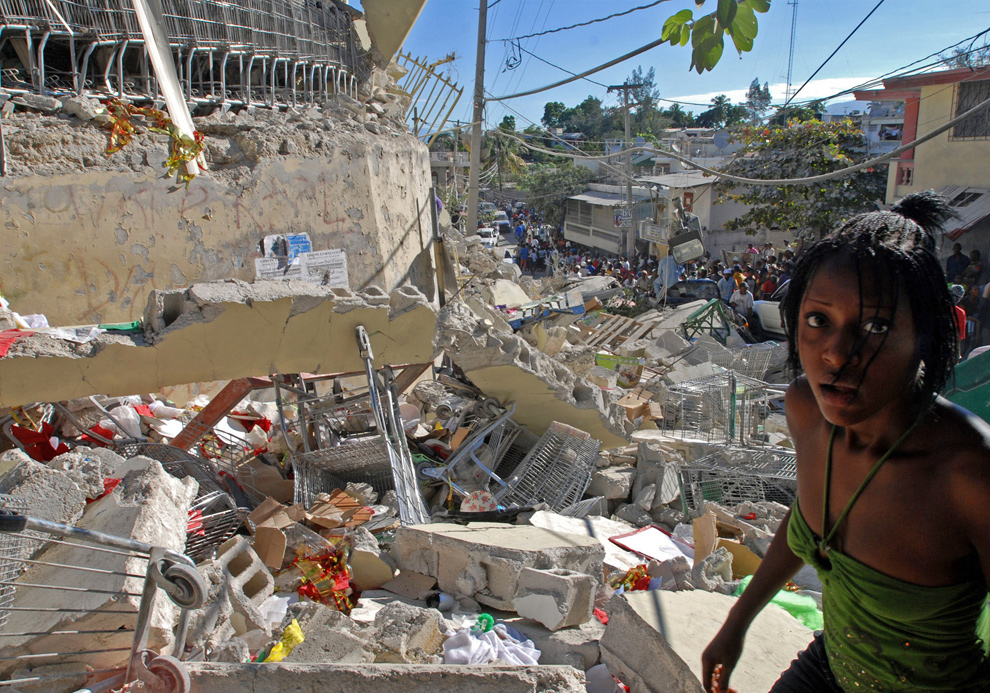
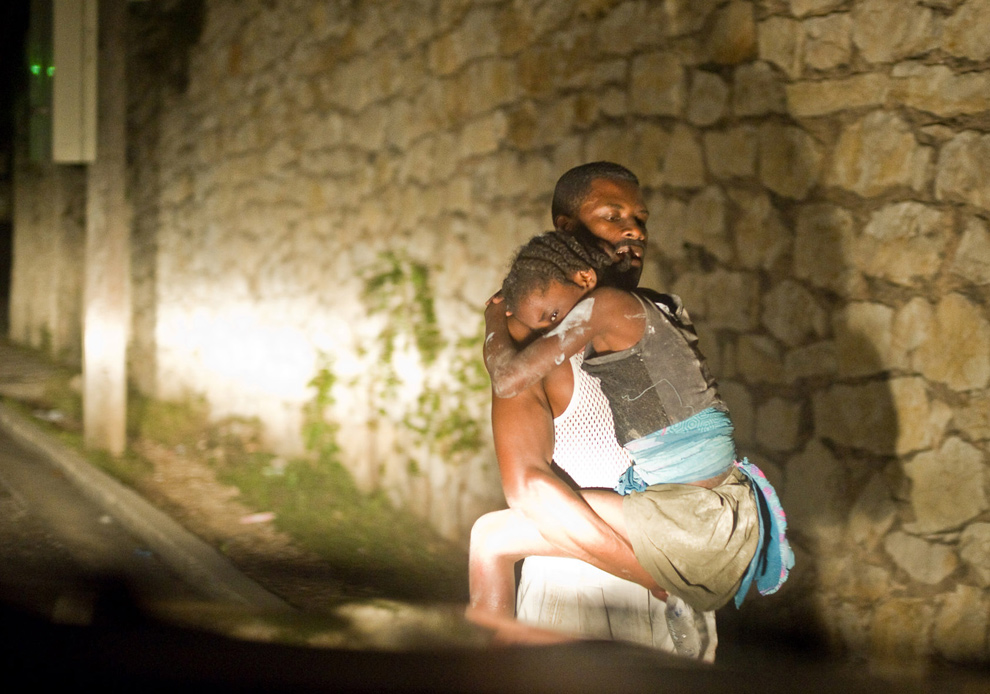
Haiti Relief


While in the process of writing my newest blog post, I decided to take a break in order to focus on the disastrous earthquake that recently struck Haiti. For anyone who may not have heard, an earthquake registering at about 7.0 in the Richter scale hit the island nation of Haiti earlier this week. The country was left completely devastated and in ruin, and while the exact number is not yet known, the death toll is estimated to exceed over 140,000. In addition to its already poor healthcare and decaying infrastructure, Haiti is the poorest nation in the western hemisphere and most definitively lacks the appropriate resources to accommodate victims. As a result, the people there are in desperate need of food, shelter, and medical supplies. We should take it upon ourselves to support the country's relief to the best of our abilities and the easiest way for us to do so is by donating funds to the various groups that are part of this effort. The following groups have pledged to aid in the cause:

Islamic Relief http://islamicrelief.com/
American Red Cross http://www.redcross.org/
The Salvation Army
https://secure.salvationarmy.org/donations.nsf/donate?openform&projectid=USN-HaitiDisaster

These are just a few of the many organizations that are involved. I strongly encourage everyone to contribute if able and to raise awareness about the tragedy by encouraging others to donate as well.
May Allah bestow patience and steadfastness upon all those affected by this catastrophe. May He allow us to help to the best of our abilities and may He continue to guide us. Ameen.


"Verily with hardship comes relief." - The Qur'an 94:6


Watch DawahAddict for another perspective on the situation.


Tuesday, December 29, 2009

Stressing the point


Many of us have just finished celebrating Caffeine Appreciation Week, otherwise known as finals week. It's the week when our friends find us drooling on top of textbooks at the library and Grey and his anatomy are no longer a priority. It's a unique experience for every student, but the one word that can most accurately sum up this week of macchiato-powered nights is stress. A stress is any physical, psychological, or emotional force that impinges on a person. Although we generally take it to be a bad thing, some stress can be positive- like the kind that keeps our body alert and prepared for danger. Stress becomes harmful when our lives turn into an endless series of challenges from which we have no relief and this is often the case for many of us in college. But students are not the only ones under this tension. In fact, most adults are under more stress more often because of their routine jobs and responsibilities. This type of stress and its persistence is becoming an increasing medical concern for our generation.

Stress is like the gateway drug of illnesses. It is the #1 killer today because it increases susceptibility to life-threatening disorders such as heart disease, high blood pressure, eating disorders, and diabetes. In fact, 90% of all primary care visits today are related to stress-linked complaints or illness. The most prevalent causes of stress are fear and lack of control. Uncertainty of what's going to happen and the inability to do something about it often drives people to become restless and uneasy, going so far as to cause severe emotional and behavioral disorders. However, this type of fear is not rational.

It is true that we must do our part in working towards what we want, but, as humans, we only have so much control over the situations in our lives. According to the teachings of the Qur'an, Muslims are encouraged to do everything they can to the best of their abilities and to then put their faith and trust in Allah to take care of the rest. Muslims ask Allah 17 times a day in prayer for this type of help.

"it is only You that we worship and only Your help do we seek."(1:4)

Although it doesn't come across in English, the Arabic word translated as "help" implies that the person asking for help has already taken substantial action towards the final goal and is now looking to Allah to help him/her complete the task. When faced with problems in our fast-paced, modern lives we often mistake our powerlessness for failure. We forget that we do not control all the variables of the world. While no one is immune to stress, some are better able to handle it than others. Remembering that Allah is in complete control gives us the strength to remain patient in the face of difficulty and protect ourselves from the negative effects of stress that can put our lives in jeopardy.*

I repeatedly find that people facing hardships will say that God hates them. But these afflictions that we must often endure are tests of our patience and expiation of our sins. Allah says in the Qur'an:

"Be sure We will test you with something of fear and hunger, some loss in goods or lives, but give glad tidings to those who are steadfast, who say when afflicted with calamity: To Allah we belong and to Him is our return. They are those on whom blessings descend from Allah and mercy and they are the ones that receive guidance." (2:155-157)

Allah blesses those who remain faithful to Him even when they have lost so much. Medical studies show that observant Muslims are less likely to develop stress-related heart conditions because of their consistency in praying and fasting. It is easy to forget Allah when we are stressed out and panicked, but it is in these times that we should remember Him most. Whether things go the way we hope or not, everything happens according to Allah's plan and only He knows what is best for us. Islam's comprehensive way of living is the prescription for a stress-free life.

*The Holy Prophet (peace and blessings be upon him) explained "The affair of the believer is amazing. The whole of his life is beneficial, and that is only in the case of the believer. When good times come to him, he is thankful and it is good for him, and when bad times befall him, he is patient and it is also good for him." [Saheeh Muslim]

Friday, December 4, 2009

No Pork on My Fork


Over the past few days, I've had a number of pork-related conversations. It is amazing to me that pork is such a respected delicacy here is the U.S. I mean, you would think that one of the leading countries in the field of health and medicine would have been convinced about this issue by now. But instead, we hear people talking about how they just can't wait to dig into their Christmas ham. Subhan'Allah.

Islam irrefutably prohibits the consumption of pork. Verse 6:145 of the Qur'an states:

Say, "I do not find in the revelations given to me any food that is prohibited for any eater except carrion, running blood, the meat of pigs, for it is contaminated, or what is impious (meat) on which a name has been invoked other than Allah's." If one is forced (to eat these), without being deliberate or malicious, then your Lord is Forgiver, Most Merciful.

Muslims don't eat pork because it has been forbidden by Allah. But why would Allah forbid it? He tells us- "it is contaminated." Countless scientific and health studies show that eating pork provides almost no health benefits and causes an assortment of unwarranted destruction on the body. Fortunately, there are some people who have picked up on this, refraining from pork altogether. Unfortunately, the majority of people have not.

Pigs are in a category by themselves. For one, their digestive systems are much different from that of any other animal. They are gluttonous, omnivorous creatures who eat anything and everything and because of this, the sheer volume of food that they consume ends up diluting the acid in their stomachs. As a result, their stomachs are no longer protective organs against contaminants. Parasites, bacteria, viruses, and toxins are permitted to pass through, into their fat, and onto that plate in the center of the dinner table.

One of the most common parasites found in pig meat is trichinella, the worm that cause trichinosis*. How does the pig get it? By eating the waste products of other animals (I wasn't kidding when I said they eat anything). Raising a pig in captivity doesn't prevent it from being able to eat its buddy's feces. These toxins remain in the pig's fat (a.k.a. - lard) which is ironically what billions of people pay good money for every day.

In addition to all of this, pork has been found to be linked with cirrhosis (liver degeneration). Chances are that most people who eat pork to begin with aren't keeping their alcohol consumption down (Islam also prohibits alcohol, but that's a WHOLE other post). Cirrhosis occurs when your healthy liver tissue is replaced by excess collagen and scar tissue and thus effectively prevents your liver from being able to perform at its best. This condition is usually irreversible and its treatment aims only at preventing further damage from occurring. In its critical stages, the only option is a liver transplant. Having a glass of wine with your pork chop will only make your liver beg for mercy.

Pork is basically pure fat. It's the last thing you need to be eating, especially in a country like the U.S. where 63% of us are overweight and 31% of us are obese. If you want to be around to watch your grandchildren and great-grandchildren grow up you need to get the pork off your fork.


Joel Olsteen gave a sermon about the prohibition of pork in the Bible. It's a three and a half minute video that I think is worth watching.

*Trichinosis is a disease in which cysts burst open inside the intestines and grow into adult roundworms. The roundworms give rise to other worms that are able to move through the intestines and into the bloodstream. They tend to invade muscle tissues, including the heart and diaphragm and can also affect the lungs and brain.